





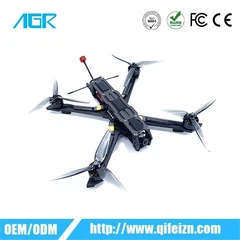


With the continuous development of science and technology, the application of drone technology in the agricultural field is becoming more and more extensive. Drones not only improve the efficiency of agricultural production, but also help farmers better manage farmland, optimize resource allocation and reduce environmental impact. This article will explore in detail the various uses of drones in agriculture and the benefits they bring.
1. Crop monitoring and evaluation
- High-resolution images: Drones are equipped with high-resolution cameras that can take high-definition images of farmland to help farmers monitor crop growth in real time. These images can be used to assess the health of crops, pests and diseases, and soil moisture.
- Multispectral and thermal imaging: Multispectral and thermal imaging technologies can provide more detailed crop data. For example, multispectral images can help identify the nutritional status of crops, while thermal imaging can detect soil temperature and moisture distribution.
2. Precision agriculture
- Variable fertilization: Farmers can achieve variable fertilization through data collected by drones. According to soil fertility and crop needs, fertilizers can be applied accurately to reduce waste and improve fertilizer utilization.
- Irrigation management: Drones can monitor soil moisture and crop water requirements, helping farmers to develop more reasonable irrigation plans and save water resources.
- Pest and disease control: Drones can quickly detect areas where pests and diseases occur. Farmers can take timely measures based on this information to reduce the use of pesticides and reduce environmental pollution.
3. Sowing and spraying
- Sowing: Drones can carry seeds for precise sowing, especially in areas with complex terrain or difficult to reach by manpower. This method can improve sowing efficiency and reduce labor costs.
- Spraying: Drones can be used to spray pesticides, fertilizers and herbicides. Compared with traditional manual spraying, drone spraying is more uniform and efficient, can cover a larger area, and reduce pesticide residues.
4. Farmland mapping and planning
- Topographic mapping: Drones can perform high-precision topographic mapping to help farmers understand the topographic characteristics of farmland and optimize farmland planning and management.
- Boundary marking: Drones can be used to mark farmland boundaries, prevent land disputes, and improve the transparency of land management.
5. Environmental monitoring
- Water quality monitoring: Drones can be used to monitor water quality around farmland, detect pollution sources in a timely manner, and protect water resources.
- Ecological and environmental protection: UAVs can monitor the ecological environment around farmland, help farmers understand the activities of wild animals, and protect biodiversity.
6. Data collection and analysis
- Big data analysis: The data collected by UAVs can be combined with satellite remote sensing data, meteorological data, etc. to conduct big data analysis to provide a scientific basis for agricultural production.
- Intelligent decision-making: Through data analysis, farmers can make more informed decisions, optimize planting plans, and improve yield and quality.
7. Case analysis
- Vineyards in California, USA: Some vineyards in California use drones for pest monitoring and spraying operations, which significantly improves the yield and quality of grapes.
- Soybean fields in Northeast China: Farmers in Northeast China use drones for precise fertilization and irrigation management, which greatly reduces resource waste and increases soybean yields.
8. Future prospects
With the continuous advancement of drone technology, its application in agriculture will become more extensive. Future drones will have a higher level of intelligence, be able to fly autonomously, automatically avoid obstacles, and be combined with Internet of Things technology to achieve full-process automated management. In addition, drones can also work in conjunction with other agricultural robots to further improve the efficiency and sustainability of agricultural production.
Conclusion
The application of drone technology in agriculture has brought many benefits, including improving production efficiency, optimizing resource allocation, and reducing environmental impact. Through precision agriculture, crop monitoring, sowing and spraying, drones have become an indispensable tool in modern agriculture. In the future, with the further development of technology, drones will play a greater role in the agricultural field and help the sustainable development of agriculture.


