





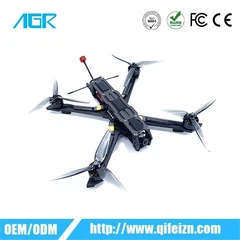


The application of drone remote sensing technology in agricultural pest and disease monitoring not only improves monitoring efficiency and accuracy, but also brings significant cost benefits. Here is a detailed analysis of the costs and benefits of this technology:
cost analysis
1. Equipment cost
Although the initial investment in drones and supporting sensors may be high, as technology advances and market competition intensifies, the price of drones gradually drops, making drone remote sensing affordable for small and medium-sized farms or agricultural cooperatives. Technology adoption costs.
2. Operating costs
Drones are relatively low-cost to operate and do not require a large labor force for ground patrols. In addition, the autonomous flight and intelligent planning capabilities of drones reduce the need for manual intervention, further reducing operating costs.
3. Maintenance costs
The maintenance cost of drones is relatively economical, and as the technology matures, maintenance becomes easier and faster.
Benefit analysis
1. Improve monitoring efficiency
Drones can quickly cover large areas of farmland, significantly shortening the monitoring cycle and improving the speed and efficiency of data acquisition. This helps detect and respond to pests and diseases in a timely manner, reducing crop losses.
2. Improve monitoring accuracy
The multispectral and hyperspectral sensors carried by drones can provide high-resolution spectral information, help identify early signs of pests and diseases, and improve the accuracy and reliability of monitoring.
3. Reduce pesticide usage
Accurate data obtained through drone remote sensing technology can help farmers apply pesticides more accurately, reduce excessive use of pesticides, and reduce the risk of environmental pollution and agricultural product residues.
4. Protect farmland ecological environment
Drone operation will not cause damage to farmland, better protect the ecological environment of farmland, and avoid soil and water pollution that may be caused by traditional pesticide use methods.
Summarize
In summary, the application of UAV remote sensing technology in monitoring agricultural pests and diseases not only improves monitoring efficiency and accuracy, but also brings significant cost benefits. Although the initial investment may be high, in the long term, drone remote sensing technology can bring higher economic and ecological benefits to farmers by improving monitoring efficiency, reducing pesticide use, and protecting the farmland ecological environment.


