





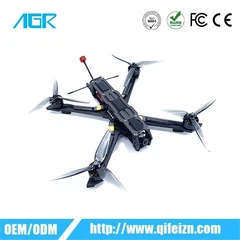


Unmanned aerial vehicles (UAVs) are increasingly used in modern agriculture, especially in crop health monitoring. By carrying various sensors and imaging devices, drones can provide high-precision, real-time crop health data to help farmers make more scientific management decisions. The following are the main technical principles of drone monitoring of crop health:
1. Multispectral imaging
- Multispectral imaging technology is one of the core tools for drone monitoring of crop health. By capturing the reflectivity of light in different bands, multispectral cameras can generate images that reflect the growth status of crops. For example, the reflectance characteristics of plants in visible and near-infrared spectra can be used to calculate the normalized vegetation index (NDVI), which is a commonly used indicator for assessing plant health. When crops are attacked by pests and diseases, their leaf color, leaf structure, etc. will change significantly, resulting in changes in appearance characteristics or lodging. These changes cause changes in spectral parameters, affecting band absorption and wavelength reflection, etc. Therefore, crops attacked by pests and diseases show different morphologies. Comparing the wavelength information with healthy crops can reveal the time and type of pest and disease attack in the spectral reflection.
2. High-resolution photography
- High-resolution cameras can capture subtle changes in crops, such as leaf color, shape, and texture. These images can help identify early symptoms of pests and diseases, as well as nutrient deficiencies in crops. By taking pictures regularly and comparing and analyzing them, farmers can detect and deal with crop health problems in a timely manner.
3. Thermal imaging
- Thermal imaging technology can measure the temperature distribution on the surface of crops, which is very useful for monitoring crop moisture status and heat stress. Through thermal imaging, farmers can identify areas of under- or over-irrigation, thereby optimizing irrigation management and improving water resource utilization efficiency.
4. LiDAR
- LiDAR technology can accurately measure the height and shape of the surface, and achieve high-precision three-dimensional modeling of farmland landforms. UAVs can fuse LiDAR data with other sensor data to generate high-precision surface models, provide detailed terrain and vegetation information, provide more accurate spatial information for the distribution of pests and diseases, and provide a reliable data basis for refined prevention and control measures.
5. Artificial intelligence analysis
- Combined with artificial intelligence (AI) technology, drones can automatically identify and classify crop health problems. For example, Moyo in South Africa has developed an autonomous drone that can detect potato leaf disease using technology from Dell and NVIDIA. The drone uses retrieval augmentation generation (RAG) technology to combine AI-driven leaf pattern analysis with high-resolution image capture, achieving an accuracy rate of up to 99.52%.
6. Real-time data transmission
- Drones have the ability to transmit data in real time, allowing farmers to check the status of their fields at any time through their mobile phones or computers. This instant feedback mechanism enables farmers to respond quickly to emergencies and reduce losses. For example, in large-scale farmland, drones promote intelligent farmland management through real-time data transmission, helping farmers to keep track of farmland status and adjust strategies in a timely manner.
Challenges and Future Outlook
Although drones have shown many advantages in crop health monitoring, they still face some challenges. Data processing capabilities are a key issue, and how to extract useful information from large amounts of data remains a major technical challenge. In addition, climate conditions and terrain complexity also affect the flight and monitoring effects of drones.
However, with the continuous advancement of technology, these challenges are expected to be resolved. In the future, the combination of artificial intelligence and big data will greatly enhance the data analysis capabilities of drones, enabling farmers to obtain more accurate decision-making support. In addition, with the popularization of drone technology, more small farmers will be able to enjoy the convenience brought by this technology.
In short, the application of drones in crop health monitoring has opened up new possibilities for the development of modern agriculture. Through efficient and accurate monitoring methods, farmers can not only better manage farmland, but also improve crop yields and quality. Despite some challenges, with the continuous advancement of technology, the application prospects of drones in agriculture will be brighter in the future.


