







Many small farmers can't afford - or don't know how - to integrate algorithms into their processes. In the U.S., small family farms with less than $350,000 in revenue before expenses make up 88.1% of all farms. Needless to say, they don't have the wherewithal to use AI.
Most small and midsize farmers will need midsize AI because of the complex analytics required for crop, livestock, and equipment management. They should expect to spend between $100,000 and $9 million to train, test, and integrate it. AI engineers alone can cost hundreds of thousands of dollars per year.
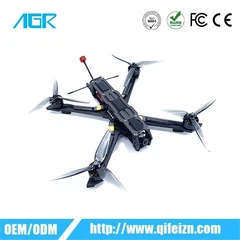
Since most family farms can't afford AI, many are turning to drones to make it more accessible. The upfront cost of a drone with the same capabilities as a midsize tractor is about $150,000 - other models can cost even less. These unmanned aerial vehicles can help farmers take advantage of one of the most promising technological developments of this century.


Here are five ways drones make AI more accessible to smallholder and medium-scale farmers:
1. Real-Time Data Collection
When equipped with sensors, high-resolution cameras and imaging technology, drones provide a constant data feed for algorithms to analyze in real-time. Without this technology, farmers would need to find another - likely more complicated - way to transfer information.
Since the resulting analysis happens in real-time, there's virtually no delay between data collection and insight generation. For example, where a manual survey can take up to 48 hours, a drone can finish in mere minutes. This speed is crucial during planting and harvest season.
2. Ease of Use
Developing and maintaining a model can be complex. Usually, without an AI engineer, most small businesses don't have the expertise to do those jobs themselves. However, an integration simplifies things - a drone with a built-in AI is designed around ease of use, so farmers don't have to worry too much about the technical side of things.
3. Built-In Accessories
Drones have cameras for capturing images from a distance, sensors for monitoring and nozzle systems for spraying fertilizer or pesticides. Farmers can add extra accessories. For example, they can use thermal imaging to measure soil moisture tension or detect nearby predators.
These accessories make AI more accessible because they provide more data for analysis. For example, since stressed plants can't absorb blue and red light due to chlorophyll pigment loss, near-infrared light cameras could help algorithms identify crop diseases.
4. Data-Driven Insights
Drones enhance the accuracy of AI analysis. Since most threats to crops and livestock are visible, a basic model can provide enough information to improve data-driven insights. Whether farmers need their algorithm's help to seed, irrigate or count cattle, they'll only need one drone.
5. Cost-Effective Adoption
Farmers will spend less on an algorithm-powered drone than on AI development. They'll also see additional savings due to the benefits high-resolution cameras and sensors offer. In fact, drone usage alone leads to a $2-$12 return on investment per acre, depending on the crop.
When farmers use drones to empower their AI, they often see significant returns that make up for the investment cost. This technology can increase their yields and save them time while minimizing the need for manual labor and equipment maintenance.


